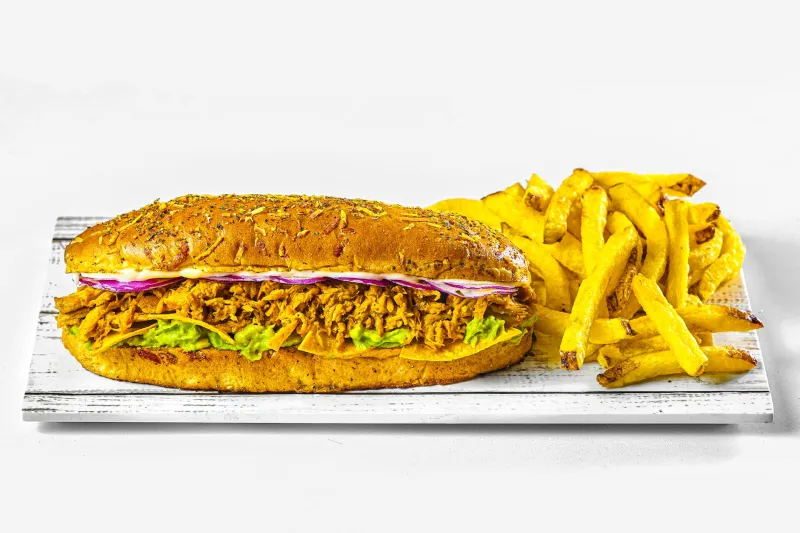
The Afternoon Clause: Sandwiches That Don’t Clock Off at One

Most sandwiches are built for the first bite. That is the easy part: good bread, a generous slice of something savoury, a crunch of pickle, and the whole thing disappears in four minutes flat. But a desk lunch is not a first bite. It is an endurance event. The sandwich is made at eight, carried across town, sat under a monitor until one, and then judged properly at three o’clock, when the afternoon has settled in and your body sends its verdict.
The first-bite trap
Freshness is not the same as staying power. A sandwich can be delicious at noon and dispiriting by mid-afternoon. The tomato has bled into the bread, the lettuce has gone limp, the filling has collapsed into a single salty mush, and the whole thing now tastes like regret wrapped in greaseproof paper. That is not a failure of flavour. It is a failure of design.
The fix is not more mayonnaise, and it is certainly not a thicker slice of bread. The fix is to treat the sandwich as a piece of lunchtime infrastructure. It needs structure, moisture control, and a filling that can take a few hours in a bag without losing its identity.
Four levers worth pulling
A sandwich that still works at three o’clock tends to get four things right. None of them is complicated, but together they make the difference between a lunch that carries you and one that leaves you rummaging for biscuits by half past two.
Protein gives the filling its substance. Leftover roast chicken, mature cheddar, ham hock, smoked mackerel, boiled egg, or a thick smear of hummus all do more than a paper-thin slice of something pink. Protein also helps the sandwich feel like a meal rather than a snack, which matters when the next proper meal is hours away.
Fibre is the quiet hero. Wholemeal bread, seeded rye, shredded cabbage, grated carrot, beetroot, celery and watercress all add bulk and texture without turning the sandwich into a salad. Fibre-rich fillings tend to release their flavour more slowly, and they keep the sandwich from tasting flat after the first few bites.
Acidity cuts through the richness and stops a dense filling from becoming claggy. British store-cupboard heroes are ideal here: pickled onions, Branston, mustard, vinegar-dressed cabbage, gherkins, or a squeeze of lemon over avocado. A sandwich without acidity is a sandwich that gives up halfway through.
Salt is the final lever, and the one most likely to be overdone. You want enough to make the other ingredients sing, not so much that the sandwich tastes like a crisp. Mature cheddar, olives, capers and cured meats bring their own salt, so taste as you build. A little salt in the filling is fine; a salt bomb is not.
Texture that survives the wait
A desk sandwich needs a bread that can hold its shape. Soft white sliced is lovely when eaten immediately, but it is not built for a morning in a rucksack. Wholemeal, sourdough, seeded rye and a decent granary loaf all have more structure and more flavour. They also toast well, which is useful if you like a bit of crunch against a soft filling.
Moisture control matters just as much. Wet fillings should be kept away from the bread until lunchtime, or at least separated by a barrier. A layer of whole mustard, a smear of soft cheese, a leaf of cabbage, or a piece of kitchen paper in the box can all help. If you are using tomato, slice it thick and salt it just before assembly, not the night before. If you are using cucumber, consider leaving it out. It is a fine vegetable and a poor sandwich companion for a delayed lunch.
Three fillings that pass the three o’clock test
Mature cheddar, apple and watercress on wholemeal. Sharp cheddar, thin slices of British apple, a handful of peppery watercress and a little mustard. The apple brings acidity and crunch, the cheddar brings salt and protein, and the watercress keeps the whole thing from feeling heavy. Wrap it tightly and it will still taste bright at three.
Roast chicken, pickled red cabbage and celery on seeded rye. Shred the chicken and mix it with a spoonful of yoghurt and horseradish rather than a lake of mayonnaise. Add finely sliced celery for crunch and pickled red cabbage for acidity. The rye holds up well, and the filling stays distinct rather than turning into a paste.
Ham hock, beetroot and mustard mayo on sourdough. A little ham hock goes a long way. Pair it with grated raw beetroot, a sharp mustard mayonnaise and a few leaves of watercress. The beetroot keeps the sandwich moist without making the bread soggy, and the mustard cuts through the richness of the ham. It is a proper lunch, not a delicate little thing.
The desk-side rules
Keep the wet elements separate until you are ready to eat. A small pot of pickle or dressing is worth the extra washing-up. Wrap the sandwich firmly, but not so tightly that the filling is crushed. If you are making it the night before, store it in the fridge and let it come up to room temperature for twenty minutes before eating — a fridge-cold sandwich tastes of very little, and a sandwich that tastes of very little is a sandwich that has already clocked off.
At Latimer’s, we are not against the quick lunch. Some days call for a rushed cheese roll and a bag of crisps. But the desk lunch deserves a bit of thought. A sandwich that still has something to say at three o’clock is not a luxury. It is a small piece of forward planning, and it makes the afternoon considerably easier to bear.