The Loud Lunch: A Defence of Sandwiches You Can Hear Across the Office
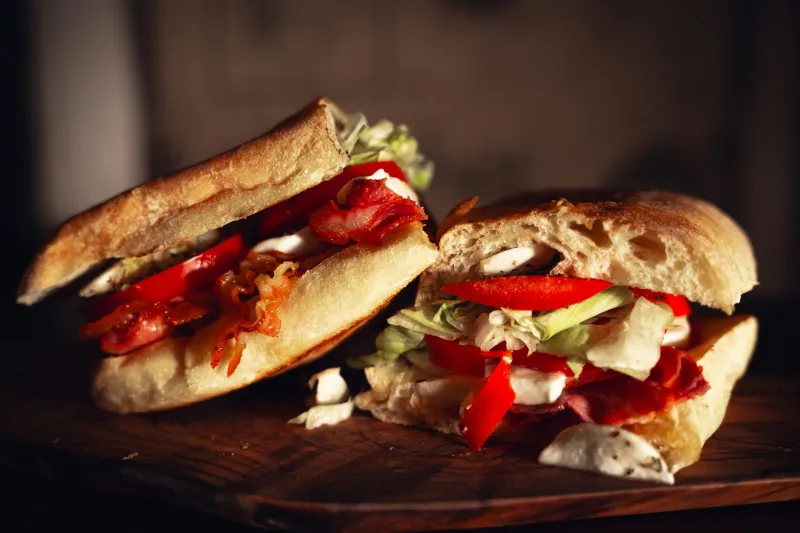
Some sandwiches arrive quietly. A soft white roll, a smear of something, a slice of ham — pleasant enough, but silent. Then there is the other kind: the sandwich that announces itself from the next desk, the one that produces a sound like a footstep on gravel when you bite into it. That is the sandwich worth talking about. Or rather, listening to.
Crunch is not a flavour. It is a sensation, and a surprisingly powerful one. Food scientists sometimes call the effect sonic seasoning: the idea that the sound of eating shapes how much we enjoy it. You do not need a laboratory to test this. Compare a limp lettuce leaf with a cold, snapped-off piece of iceberg and you will understand immediately. The taste is roughly the same. The experience is not.
Why a sandwich should make a sound
A serious sandwich is a small piece of engineering, and texture is part of the structure. Soft bread needs something to push against. Creamy fillings need an edge. A cheese and pickle roll with nothing crisp inside can feel like eating a duvet. Add a few pickled onions or a handful of ready-salted crisps and the whole thing wakes up.
There is also anticipation. The first crunch tells you the sandwich is fresh, that the lettuce was not packed yesterday, that the toast still has some life in it. It is a small signal of care. In a lunchtime economy full of sad meal deals, that counts for something.
And then there is the social dimension. A crunchy sandwich is not a private pleasure. It is a public one. The rustle of a crisp packet is practically a national soundtrack. The snap of a pickled gherkin can carry across an open-plan office. Some people find this annoying. I find it reassuring: at least somebody is enjoying their lunch.
The British crunch league table
Not all crunch is created equal. Here is a rough ranking of the fillings that do the heavy lifting, based on noise, texture and how well they survive until noon.
Top tier: the loud ones. Pork scratchings and crackling are the heavyweight champions. They bring salt, fat and a shattering crunch that can be heard two rooms away. Salt-and-vinegar crisps are close behind, though they have a tendency to go soft if added too early. Pickled red cabbage and raw white cabbage slaw bring a cleaner, wetter snap. Radishes are excellent, especially sliced thinly and layered with butter. Cucumber is underrated: cold, crisp and reliable, provided you salt it and pat it dry.
Second tier: the supporting cast. Iceberg and Little Gem lettuce are the classic choices, and for good reason. Celery, apple and fennel all add a fresh, breaking crunch, though they need to be cut small enough not to pull the sandwich apart. Toasted sourdough or granary bread contributes a crust-level crunch that works well with soft fillings like egg mayonnaise or coronation chicken.
Third tier: the tricky ones. Tomatoes are a joy but a liability. They are soft, wet and prone to turning the bread soggy. Hard cheese can add a firm bite, but it is not really a crunch. Crispy bacon is excellent when freshly cooked, disappointing when it has been sitting in a fridge. Fish fingers, fresh from the oven, have a crunch worth planning around.
Bottom tier: the silent types. Mashed avocado, soft cheese, hummus, pâté. Lovely things, all of them, but they need a crunch partner. A sandwich made entirely of soft ingredients is not a crime, but it is a missed opportunity.
The moisture problem, and how to beat it
Crunch and moisture are natural enemies. The moment a crisp lettuce leaf meets a wet tomato slice, the clock starts ticking. The goal is not to eliminate moisture but to control it.
The first rule is to dry your greens. Wash them, spin them, pat them with a tea towel, then pat them again. A dry leaf stays crisp for hours. The second rule is to create a barrier. Butter both slices of bread, not just one. Butter is not just for flavour; it is a waterproof layer. A slice of cheese against the bread does the same job. So does a smear of thick mayonnaise or a generous spreading of mustard.
The third rule is to keep the wettest ingredients away from the bread. Tomato slices belong in the middle, sandwiched between drier ingredients. Pickles should be drained. If you are using crisps, add them at the last possible moment, ideally just before you eat. A crisp sandwich is a wonderful thing, but it is not a make-ahead lunch.
Finally, think about your wrapping. Cling film traps moisture and turns crunch into chew. A sheet of greaseproof paper, folded into a loose parcel, lets the sandwich breathe a little. If you are carrying lunch to work, pack the crunchy components separately and assemble at your desk. It takes thirty seconds and makes a genuine difference.
A practical build for a loud lunch
Start with a sturdy bread: sourdough, granary, or a good crusty roll. Butter both sides. Add a layer of hard cheese or cold roast meat against the bottom slice. Pile on dry lettuce, then thin slices of cucumber or radish. Add your main filling — egg mayonnaise, tuna, chicken — in the middle. Finish with something loud: a handful of crisps, a spoonful of pickled cabbage, or a few slices of pickled onion. Close the sandwich, press it gently, and wrap it in paper.
If you are eating at home, toast the bread and eat immediately. The contrast between warm, crisp toast and cold, crunchy filling is one of the great lunchtime pleasures. If you are eating at your desk, accept that your sandwich will make a noise. Own it. A loud lunch is a sign of a life lived properly.
The office etiquette of a crunchy sandwich
There is a time and a place. A pork scratching sandwich at 11am might be a step too far in a quiet office. A crisp sandwich at noon is fair game. The general rule is this: if your lunch sounds like someone walking on gravel, give the room a warning. A simple 'sorry, this is going to be noisy' is enough. Most people will be too busy envying your lunch to complain.
And if you are the one judging? Remember that the person with the loudest sandwich is usually the person who has thought most carefully about their lunch. They have dried their lettuce. They have buttered both sides. They have timed the addition of crisps to the exact moment before eating. That is not an annoyance. That is dedication.
A good sandwich should be heard as well as tasted. So next time you build one, listen for the crunch. If you cannot hear it, add something crisp. Your lunch will thank you.