Before the First Slice: Why Butter Is the Sandwich Decision That Matters Most
Most sandwich debates start in the middle. Ham or cheese, mayo or mustard, whether cucumber belongs anywhere near a prawn. All fair questions. But the first decision — the one that shapes everything after it — happens before the filling goes anywhere near the bread. It is the butter line.
At Latimer's Sandwich Co. we treat that thin, even layer as the quiet backbone of a proper British sandwich. Not a garnish. Not a guilty extra. A structural choice, a seasoning choice and, often, the difference between a lunch that holds its nerve until one o'clock and one that gives up by eleven.
The quiet structural job butter does
Butter is not just there for flavour. It is a barrier. A thin, continuous layer of fat across the crumb slows the migration of moisture from wet fillings into the bread. Tomato, cucumber, coleslaw, a juicy slice of beef — all of them release liquid. Without a butter line, that liquid has a clear run at the bread. With one, it has to work harder.
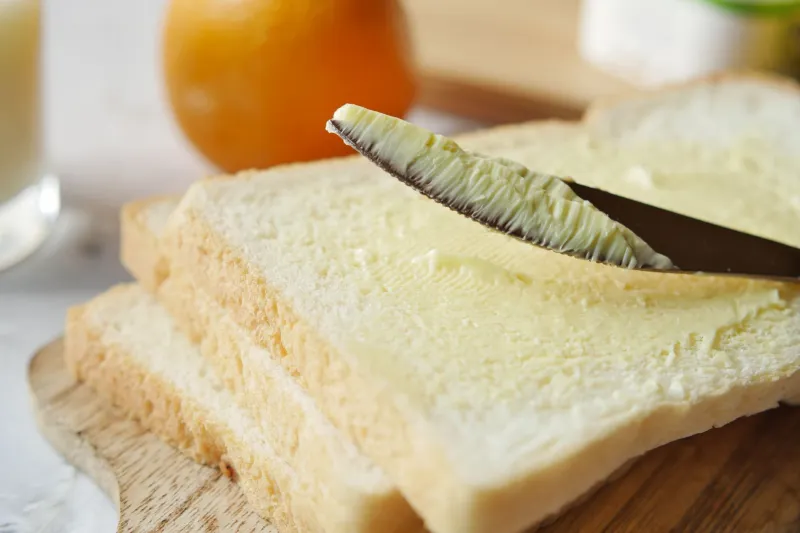
This is why the butter line matters most in sandwiches that are made ahead. A bacon butty eaten standing up can survive almost anything. A tomato sandwich boxed at eight in the morning cannot. If the sandwich has a commute, a meeting or a train journey in its future, butter the bread first. Spread it thinly and evenly, right to the edges. A clump in the middle is a missed opportunity; the edges are where sogginess usually starts.
Butter also seasons the bread itself. That sounds obvious, but it is easy to forget. Good bread has flavour, and salted butter lifts it. The butter line is where you decide how savoury the whole sandwich will taste before the filling has had its say.
Salted or unsalted? Read the filling first
The lazy answer is to use salted butter for everything. The better answer is to look at what is going on top.
Salted butter earns its place with mild fillings: cucumber, cress, cold roast chicken, a plain cheese sandwich, egg. It gives those fillings a savoury anchor without overwhelming them. Unsalted butter is the better call when the filling is already salty or intense — mature Cheddar, bacon, smoked fish, salt beef, anything pickled. You can always add a little salt to the filling, but you cannot take it out of the butter.
Cultured butter is worth trying if you take sandwiches seriously. The slight tang and deeper dairy flavour do more for a simple cheese and pickle than a lot of fancy condiments. It is not essential, but it is noticeable. Think of it as the difference between a good loaf and a great one: same sandwich, different gear.
Temperature is not a detail
Cold butter is the enemy of good bread. Straight from the fridge, it drags, tears and leaves patches. You end up with uneven coverage and a sandwich that looks like it was assembled in a hurry. Take the butter out twenty minutes before you need it, or use a warm knife and a little patience. You want it soft enough to spread in a thin, even film, but not so soft that it turns oily.
A simple test: drag your knife across the surface. If the butter curls and skips, it is too cold. If it slides about in a puddle, it is too warm. Somewhere in between is the sweet spot. In summer, keep the butter block in the coolest part of the kitchen. In winter, a few minutes near the kettle is usually enough.
Regional butters worth seeking out
Britain makes excellent butter, and the regional differences are worth paying attention to. Cornish salted butter tends to be rich and direct — ideal for a plain cucumber sandwich or a warm crusty roll. Welsh butter often has a pleasing sea-salt edge that sits well with strong cheese. Yorkshire cultured butter brings a gentle tang and a lovely colour. Scottish butter can be beautifully creamy, especially the lightly salted styles. Guernsey and Jersey butter are richer still, which makes them generous but not always subtle.
You do not need a specialist supplier to make a better sandwich. A good farmhouse butter with a high fat content and a short ingredient list will do more for your lunch than an expensive filling. Look for butter that tastes of something on its own. If it does not, it is just grease with a label.
Butter versus mayonnaise: a working rule
This is where opinions get strong. Mayonnaise has its place, but it is not a universal substitute for butter. As a bread barrier, butter is usually the better tool: lower water content, cleaner flavour, and it sets slightly as it cools, which helps the sandwich hold together.
Reach for mayonnaise when the filling is lean and needs lubrication, when you want acidity to cut through richness, or when mayonnaise is already part of the filling — egg mayo, chicken salad, a chip butty with a dubious amount of vinegar. Reach for butter when the sandwich contains watery vegetables, when it will be made ahead, when the bread is dry or day-old, or when you want the filling to taste of itself rather than of salad cream.
A useful rule: butter the bread, then treat mayonnaise as a filling ingredient rather than a second spread. That stops the whole thing turning into a slippery mess and keeps the flavours in order.
Three quick checks before you spread
First, look at the bread. Fresh white, sourdough, wholemeal, a floury bap — all of them benefit from butter, but delicate bread needs a lighter hand. Second, look at the filling. If it is wet, butter generously. If it is dry, butter generously anyway, then add something juicy. Third, think about time. A sandwich eaten in five minutes can get away with more. A sandwich eaten in five hours needs a proper butter line.
None of this is complicated. It is just a matter of giving the spread its due. The filling may be the headline, but the butter line is the decision that lets the headline land. Get that right, and the rest of the sandwich has a much better chance of behaving itself.