Eight British Sandwich Fillings Worth Saving (and How to Make Them at Home)
Some sandwiches are not just lunch. They are a record of what Britain used to do with cheap ingredients, local fish, whole animals, and a bit of patience. In 2026, many of these fillings are harder to find than they should be. They have been pushed aside by global fillings, shrink-wrapped meal deals, and a general loss of confidence in old-fashioned food. But they are worth saving, not as museum pieces, but as good things to eat. Here are eight to chase, with a little history, a place to start looking, and a simple recipe for the home counter.
1. Pease pudding
Pease pudding is the North East in sandwich form: split peas cooked soft with ham stock, seasoned, and spread thickly on a stottie. It was once a staple in mining communities and chip shops, a cheap and filling partner to ham or bacon. It is still made in pockets of Tyneside, but it rarely travels far beyond them.
Where to try it: Newcastle and Gateshead, especially Grainger Market and old-school sandwich shops that sell stotties. Look for a pale, spoonable texture rather than a smooth paste.
Modern recipe: Soak 250g yellow split peas overnight. Simmer with 700ml ham stock until collapsing, about 45 minutes. Mash with 30g butter, salt, pepper, and a grating of nutmeg. Cool slightly, then sandwich with ham and a little mustard.
2. Potted shrimp
Morecambe Bay shrimp cooked in butter with mace and cayenne, then packed into little pots, is one of the great Lancashire luxuries. It was once a tea-table treat and a smart sandwich filling. The shrimp are small, sweet, and fragile, which is exactly why the filling works: richness, spice, and a whisper of the sea.
Where to try it: Lancashire and the north west, particularly fishmongers and old-fashioned grocers around Morecambe Bay. A proper deli should sell it in small pots.
Modern recipe: Melt 75g butter with a pinch of ground mace and cayenne. Fold in 100g peeled brown shrimp, a squeeze of lemon, and salt. Pack into a small pot, chill, and spread on thin white bread with cucumber.
3. Beef dripping
Dripping on bread sounds austere until you try it: rich, savoury, and deeply comforting. It was a worker's lunch in the Midlands and the North, a way to use the fat from a Sunday roast. The best versions are seasoned with salt and pepper and spread thinly on good bread, maybe with a pickled onion on the side.
Where to try it: Traditional butchers and market cafés in the Midlands and northern England. Ask for beef dripping rather than generic cooking fat.
Modern recipe: Warm 100g beef dripping until soft but not hot. Beat in a teaspoon of chopped parsley, salt, and black pepper. Spread sparingly on toasted sourdough and top with pickled shallots.
4. Haslet
Haslet is a Lincolnshire pork loaf, seasoned with sage and bound with breadcrumbs. It is eaten cold, sliced in sandwiches, and it has the kind of honest, savoury flavour that makes a packed lunch feel cared for. It was once common across the East Midlands; now it is mostly found in pork butchers and farmers' markets.
Where to try it: Lincolnshire pork butchers, farmers' markets, and delis with a proper regional counter. Look for a coarse texture and a good sage hit.
Modern recipe: Mix 500g minced pork shoulder with 100g breadcrumbs, a chopped onion, two teaspoons of chopped sage, salt, and pepper. Press into a loaf tin and bake at 180C for about 50 minutes. Cool completely before slicing. Serve with mustard or piccalilli.
5. Brawn
Brawn is pressed head meat set in its own jelly, sharpened with vinegar and herbs. It is a classic way of using the whole pig, and it has a texture and depth that sliced ham cannot match. It fell out of fashion as butchery changed, but good butchers still make it.
Where to try it: Yorkshire and Lancashire markets, traditional butchers, and delis that make their own. It should be glossy, well seasoned, and not too finely chopped.
Modern recipe: Simmer pig trotters and cheek with bay, peppercorns, and onion until tender. Pick the meat, strain the stock, and reduce it slightly. Season with vinegar, parsley, salt, and pepper, then set in a loaf tin. Slice cold and sandwich with piccalilli.
6. Bloater paste
Bloater paste comes from East Anglia, where smoked herring was once a cheap and plentiful food. Pounded with butter and pepper, it became a potted paste for toast and sandwiches. It is salty, smoky, and intensely savoury, and it deserves better than a forgotten shelf.
Where to try it: Suffolk and Norfolk fishmongers, delis, and seaside food shops. If you see a bloater, buy it; if you see the paste, buy two.
Modern recipe: Flake 200g cooked smoked herring, checking for bones. Pound with 75g soft butter, a squeeze of lemon, a pinch of mace, and black pepper. Pack into a pot and chill. Spread on brown bread with cucumber.
7. Pressed ox tongue
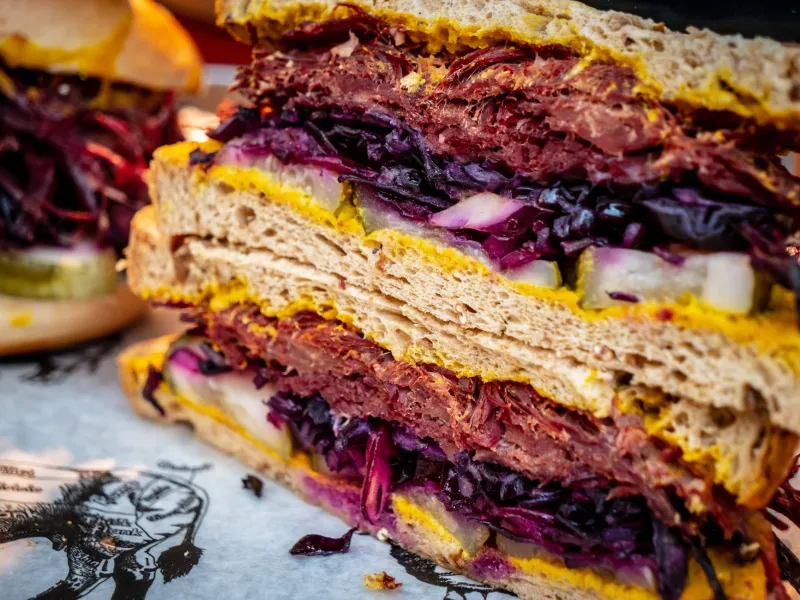
Pressed tongue was a deli and butcher's staple, especially in Jewish and northern food traditions. Cooked, pressed, and sliced thin, it makes a handsome sandwich with mustard and pickles. It is slowly disappearing as butchers streamline their counters.
Where to try it: London delis, northern markets, and butchers who still cook their own meats. Ask for pressed tongue, not sliced roast beef.
Modern recipe: Simmer a prepared ox tongue with onion, carrot, bay, and peppercorns until tender. Peel while warm, press under a weight until cold, then slice thinly. Sandwich with English mustard and a good pickle.
8. Laverbread
Laverbread is Welsh seaweed, cooked down and often mixed with oatmeal. It is not a sandwich filling in the conventional sense, but with bacon it becomes one of the best breakfast sandwiches in Britain. It is mineral, briny, and strange in the best way.
Where to try it: Swansea Market, Welsh seaside cafés, and specialist Welsh food shops. Look for fresh laverbread rather than a sauce.
Modern recipe: Warm 200g cooked laverbread with 50g oatmeal, black pepper, and a little lemon. Fry in bacon fat until hot and slightly crisp. Sandwich with thick bacon and brown sauce.
Why these fillings matter
These are not quaint relics. They are practical, regional, and delicious, and they show what British sandwich making can do when it is not trying to be everything to everyone. The way to save them is simple: ask for them, buy them, and make them at home. In 2026, a good lunch counter can keep a filling alive with one special on the board. That is how traditions survive, not in museums, but between two slices of bread.