The Architecture of Lunch: Rules for a Sandwich That Holds Together

Most sandwich failures get blamed on the filling. The tomato was too wet. The pickle was too sharp. The cheese was too crumbly. In reality, a sandwich is a small structure, and most of its problems are structural. Moisture moves. Weight settles. Acid softens. If you build without thinking about those forces, you get the familiar lunchtime collapse: bread that has gone translucent at the base, filling that slides out at the first bite, and a middle that tastes like everything and nothing at once.
The good news is that a better sandwich does not need a chef's kitchen or a stack of equipment. It needs a few repeatable rules. We tested them with a granary loaf, mature cheddar, watercress and pickled onion, and then pushed them with tomato and beetroot. The principles held.
Start with crumb, not crust
Bread has a job: it has to carry the filling without turning into wallpaper paste. A granary loaf is a useful test case. It is nutty, sturdy enough for a packed lunch, but often has an open crumb. Those large holes are not just character. Under pressure, they become reservoirs. Moisture gathers in them, then spreads sideways through the slice.
A finer, medium crumb is more reliable. It absorbs a little moisture without going soggy straight away, and it compresses evenly. Cut slices about a centimetre thick. Too thin and the bread tears; too thick and the sandwich becomes a bread dish with a filling garnish. If the loaf is very fresh and warm, let it cool before building. Warm bread steams under wrap, and steam is moisture looking for somewhere to settle.
Fat is a delay, not a waterproof jacket
Butter is often described as a barrier. It is better described as a delay. A thin, even layer of softened salted butter slows the movement of water from filling to bread. It does not stop it forever, and it will not save a sandwich left in a warm bag for six hours. But it buys useful time.
Spread butter edge to edge on both slices. A dab in the middle leaves a dry rim and a wet centre. Mayonnaise works too, especially with chicken or cheese, but butter gives a more stable layer with mature cheddar and pickled things. The point is coverage, not thickness. A heavy hand makes the bread greasy and the filling slide.
Put wet things in the middle
Tomato is the classic offender. Slicing it and immediately clamping it against bread is asking for trouble. Slice it, salt it very lightly, and leave it on kitchen paper for five minutes. Then place it against cheese or another fatty layer, not directly against the crumb. If you are packing the sandwich for later, keep tomato separate and add it at lunchtime. That is not fussiness; it is basic water management.
Beetroot needs the same respect. Pat it dry, especially if it is vacuum-packed and wet. Its juice is both water and pigment, so it will mark bread and soften it quickly. Put beetroot in the middle, paired with cheddar, cream cheese or butter, rather than laid straight against granary.
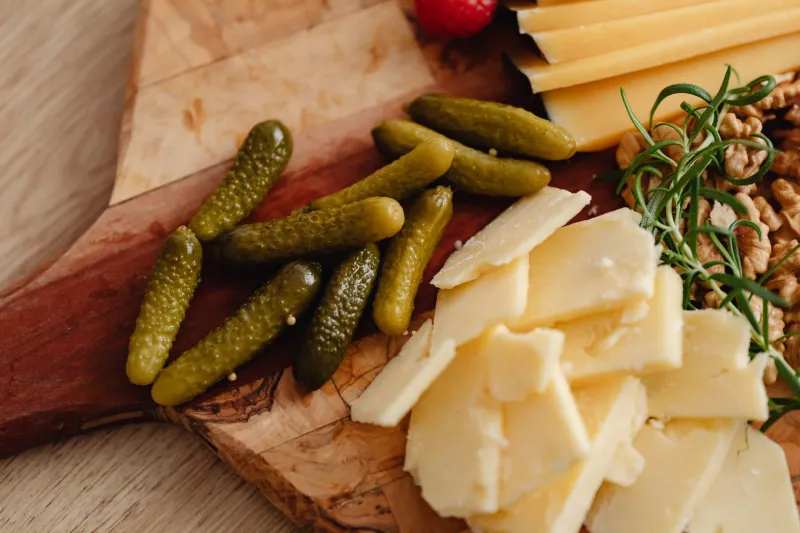
Pickled onion is drier than tomato but sharper. Drain it well and slice it thin. Acid can soften the crumb over time, so keep pickled onion away from the bread and near the cheese. Watercress is delicate but useful: use dry sprigs, remove tough stems, and let it sit on top of the wet layer as a soft buffer rather than crushed against the bottom slice.
Cheese is a dam
Mature cheddar is not just a flavour. It is structure. Sliced cheddar holds its shape, provides fat, and blocks wet layers from reaching the bread. Grated cheese is lovely in a toastie, but in a cold sandwich it shifts and leaves gaps. Slice it, or cut it into thick shards.
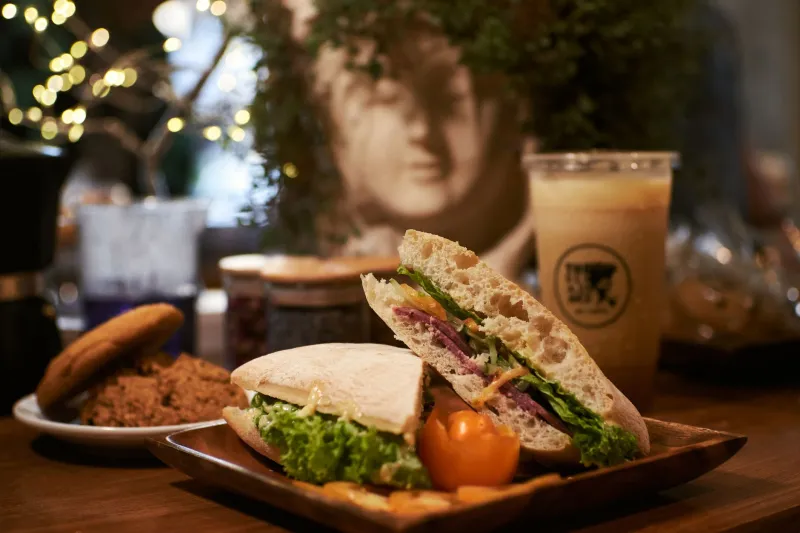
A reliable order for granary, cheddar, watercress and pickled onion is: butter both slices, cheddar on the bottom, drained pickled onion on the cheddar, watercress on top, then the buttered top slice. If you are adding tomato, put it on the cheddar, then watercress, then the top slice. The watercress is not a waterproof membrane, but it keeps the tomato from sitting directly against the top bread.
Pressure and rest
A sandwich needs a little compression, but not a brick. Wrap it firmly in parchment or beeswax wrap and press gently for a minute. This settles the layers so they do not slide. Do not let a tomato-heavy sandwich rest for hours; the rules slow moisture, they do not suspend physics.
For a packed lunch, build the dry and fatty layers in the morning and carry wet ingredients separately. If that sounds like too much effort, at least drain the pickles, pat the beetroot, and butter both slices. Those three habits solve most of the problem.
Cut cleanly
A sharp knife matters more than a diagonal cut. A blunt blade crushes the bread and squeezes the filling. Cut steadily, and if the sandwich is thick, use a gentle sawing motion rather than a single press. The aim is a clean edge, not a flattened lunch.
The rules in short
Use bread with a medium crumb and slice it thick enough to carry the filling. Butter both slices edge to edge. Drain anything pickled or wet. Put tomato and beetroot in the middle, against cheese or fat. Use sliced cheddar as a dam. Keep delicate leaves dry. Wrap firmly, rest briefly, and cut with a sharp knife.
None of this is guesswork. It is just lunch treated as a small piece of engineering. And once the structure is right, the filling gets to do its job: tasting of something.