The Postcode in the Jar: How Condiments Draw Britain's Sandwich Borders
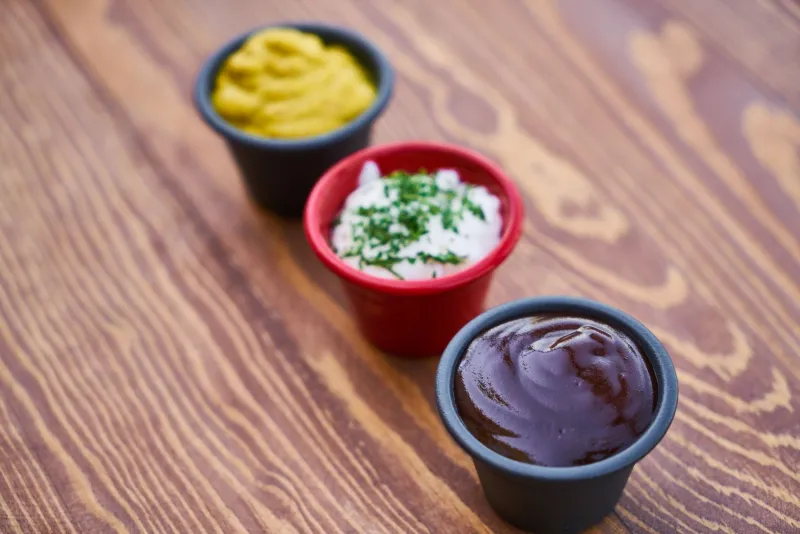
Walk into any good sandwich shop and clock the condiments. Not the chalkboard, not the bread basket, but the jars and bottles lined up by the till. Brown sauce. Salad cream. Piccalilli. Maybe a mustard so strong it has its own warning label. The way a person reaches for one of those tells you more about their lunch instincts than any accent ever could.
This is not an exact science. Nobody is checking condiment loyalty at county lines. But there are patterns, and those patterns are stubborn. What you put on your sandwich is often a family habit, a shopkeeper's default, a memory of school lunchboxes and Saturday chip runs. It is regional food history written in vinegar, sugar and spice.
Brown sauce: the broad church with a northern pulse
Brown sauce is the great British sandwich diplomat. It turns up in bacon butties from London cafés to Midlands tea rooms, and it has a particular pull in the north and Midlands. The familiar story of HP Sauce takes us back to the late 19th century and a grocer in Nottinghamshire, though the brand later became firmly tied to the Houses of Parliament on the label. The history matters less than the habit: brown sauce is what many people reach for when a sandwich needs a savoury edge, a bit of tang and a reminder that lunch should not be too polite.
Tasting notes? Malt vinegar first, then tamarind, dates, a warm hum of spice and a dark sweetness that cuts through fat like a knife through a good pork pie. On a sausage sandwich it is close to essential. On a bacon butty it is a statement of intent. On cheese it divides opinion, which is exactly what a proper condiment should do.
If salad cream is a raised eyebrow, brown sauce is a firm handshake. It says: I know what I like, and I would like it on a white bap, please.
Salad cream: Lancashire's bright tang
Salad cream is the condiment that refuses to be embarrassed by itself. It is not mayonnaise. It is not pretending to be. It is sharp, yellow, a little sweet and entirely unsentimental about cucumber. Heinz introduced its version in 1914, and over the decades it became a fixture in British kitchens, particularly in the north west.
Lancashire and Merseyside have a well-documented fondness for the stuff, and you can feel it in the way a ham salad sandwich is assembled: soft white bread, a generous swipe of salad cream, crisp lettuce, maybe a slice of tomato that has been patted dry by someone who knows what they are doing. The vinegar and mustard in the sauce wake up cold fillings. The sugar and oil round off the edges. It is a condiment with a job to do.
There are pockets of salad cream loyalty elsewhere, of course. The Midlands has its own quiet devotees. But the north west wears it most visibly, and there is something admirable about that. Salad cream does not need a gastropub rebrand. It needs a plate of chips and a proper butty.
Piccalilli: the yellow belt
Piccalilli is the condiment that makes a sandwich feel like a ploughman's lunch that has been folded in half. Mustard, turmeric, vinegar, cauliflower, gherkin, maybe carrot or pearl onion. It is loud, crunchy and unapologetically old-fashioned. The idea arrived through Indian-inspired preserves in the 19th century, and British cooks made it their own with a mustard-heavy sauce that stains everything it touches in the best possible way.
The so-called piccalilli belt is a loose and cheerful thing, running through parts of the Midlands, Yorkshire and the north east, with strong outposts wherever pork pies and mature cheddar are taken seriously. It is the condiment of choice for a cheese sandwich that needs a kick, a ham roll that needs a bit of crunch, or a cold meat sandwich that is in danger of being too well behaved.
Tasting notes: sharp mustard heat, sweet vinegar, a vegetal crunch and a turmeric glow that says this lunch means business. It is not for everyone. It is not supposed to be.
A light-hearted condiment map
Think of this as a pub quiz map, not a census.
- London and the south east: brown sauce with bacon, mustard with beef, mayonnaise creeping in everywhere, piccalilli appearing in gastropubs with a knowing nod.
- The Midlands: brown sauce heartland, piccalilli strong, salad cream quietly present in home kitchens.
- Lancashire and Merseyside: salad cream devotion, especially with ham, cheese and cucumber; brown sauce still respected for sausage.
- Yorkshire and the north east: piccalilli and brown sauce, mature cheddar, ham, pork pie, a general suspicion of anything too runny.
- Scotland: brown sauce on morning rolls and bacon, red sauce where it belongs, salad cream making its case.
- Wales: brown sauce, mustard, cheese and pickle, with regional loyalties shifting from counter to counter.
- Northern Ireland: brown sauce and salad cream both have their supporters, often in the same family, sometimes at the same table.
What the jar actually says
None of this is destiny. People move, marry, shop in different supermarkets and change their minds. But condiments are one of the last bits of regional food culture that we carry around without thinking. They are cheap, familiar and deeply personal.
A sandwich is a small thing. A condiment is a smaller thing still. Yet together they tell a story about where you learned to eat, what your mum kept in the cupboard, and whether you believe lunch should be sharp, sweet, hot or comforting. The next time you queue at a counter, look at the jars. Your postcode might be in there somewhere.