Departures Lounge: How to Choose a Station Sandwich That Earns Its Ticket
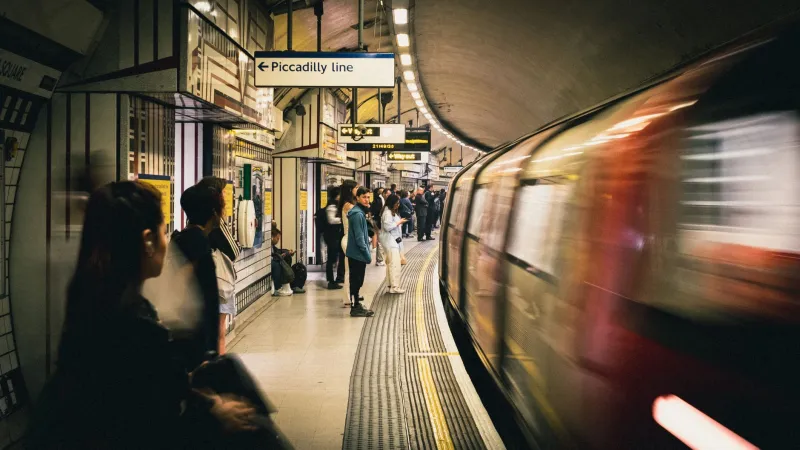
There are sandwiches you plan and sandwiches you panic-buy. The first kind involves a chalkboard, a conversation and someone who knows how you like your bread. The second happens at 11:20 on a Tuesday, under fluorescent light, while the train you have not yet boarded is already showing as delayed.
Station sandwiches occupy a peculiar place in British lunch culture. They are among the most expensive sandwiches many of us buy and among the least examined. Nobody's favourite sandwich comes from a fridged cabinet beside a departures board. Yet a great many of them are eaten every year, and a small, satisfying number are genuinely good. The trick is telling the two apart before the platform announcement begins.
Travel Rewrites the Brief
At a desk, a sandwich is lunch. On a platform, it is logistics. The requirements change entirely: one hand free for a suitcase, no filling migrating onto a coat sleeve, no odour that carries down a quiet carriage, enough structural integrity to survive being eaten at a forty-five-degree angle, and packaging that does not fight back when you are standing up.
Appetite shifts with the journey, too. A short hop to the next city calls for something small and clean. A four-hour haul makes us want salt, fat and soft bread — the kind of food that feels like a reward for sitting still. Add the low-grade stress of travel and most of us will over-order, then eat it too fast. Knowing that in advance is half the battle.
The Station League Table
Having eaten a fair number of these in the line of duty, we have settled on a grading system borrowed from the departure boards themselves.
The chilled triangle — Delayed
The default. Pre-packed, cut on the diagonal, bread with the texture of a cushion left out in the rain. The filling usually sits in one dense lump in the middle, leaving two arid corners. And yet: it is cheap, it is everywhere, and the meal-deal arithmetic can be genuinely persuasive. Buy it only when it is the last decent option and the journey is long. Choose the firmest filling available, add crisps for texture, and accept that you are buying convenience rather than lunch.
The bakery-counter baguette — On Time
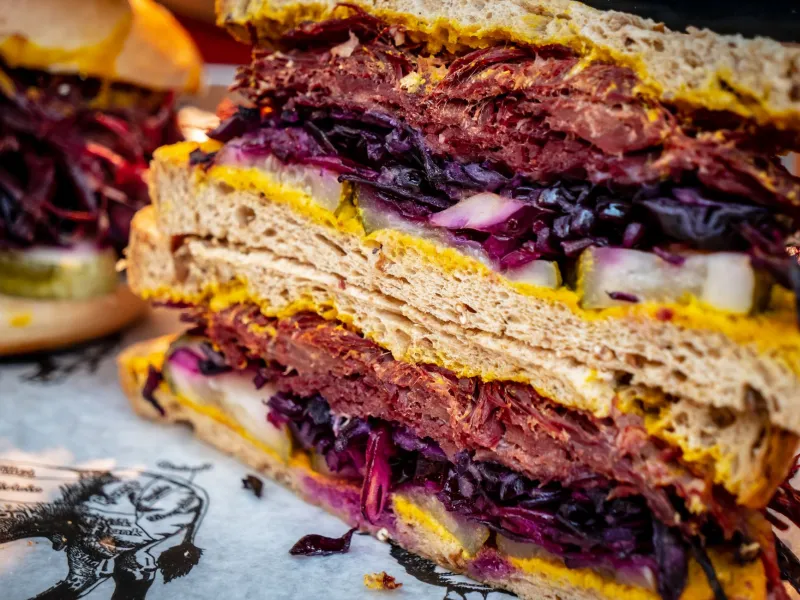
Bread baked on site, filling assembled to order, a person asking whether you want it warmed. This is usually the best thing on a station concourse. The risks are specific: sauce pooling at the far end, over-stuffing that makes the first bite a landslide, and a crust that shatters across your lap. Order with restraint. If there is a sauce, ask for it in the middle rather than spread to the edges.
The premium grocer's meal deal — Slight Delay
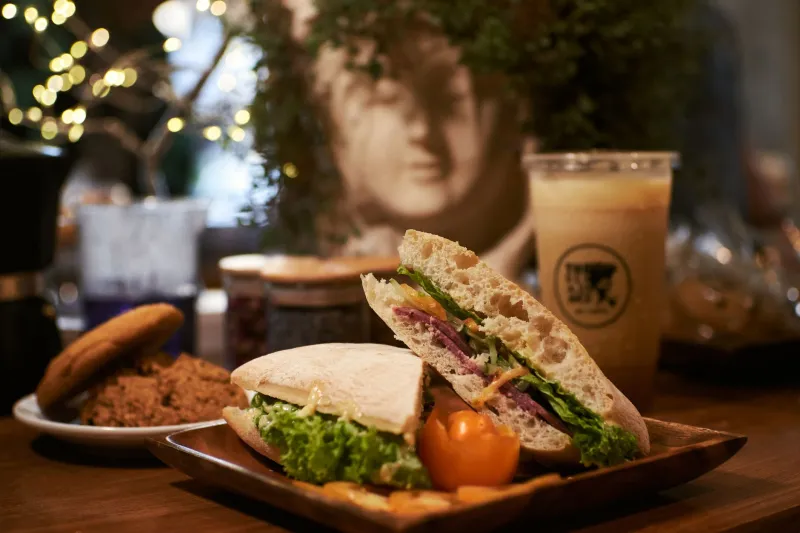
Better ingredients, better bread, assembled rather earlier than you would like and refrigerated hard. Cold dulls everything: cheese turns waxy, tomato loses its nerve, mayonnaise stiffens. If you have twenty minutes before boarding, let it come up to room temperature. Check the leaves at the cut edge, which are the first thing to go translucent and sad.
The independent counter — On Time
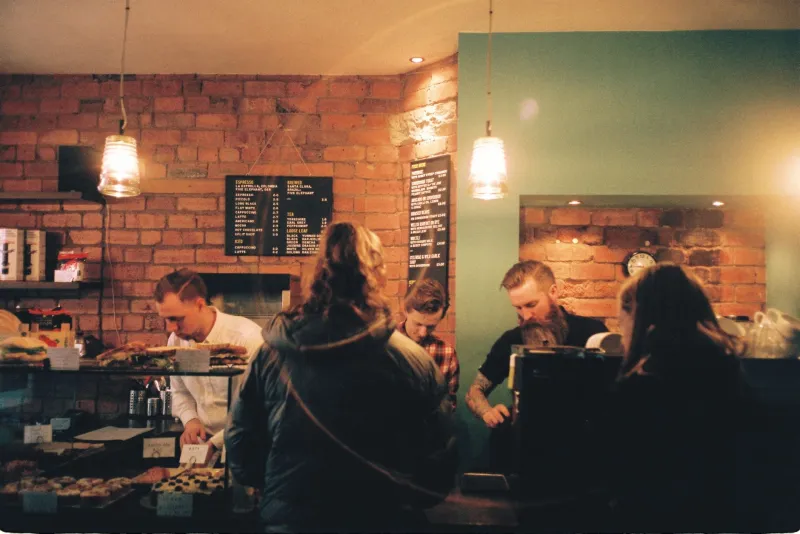
More of these than there used to be, particularly at the larger termini. Ask what was made that morning. Order the plainest item on the board — a good shop's default filling tells you more about its standards than its most complicated creation. If the person serving can tell you where the ham came from, buy the ham.
The hot counter and the pasty-adjacent — Slight Delay
Warm food on a train is one of life's underrated pleasures, but the smell travels considerably further than you do. Be honest about your carriage. There is also a structural problem: steam softens bread from the inside out, so a hot filling has a limited window before the whole thing collapses. Eat it within twenty minutes or not at all.
The vending machine — Replacement Bus Service
Not a sandwich in any meaningful sense. A geometry lesson wrapped in plastic. If this is your only option, buy two and a bottle of water, and treat the experience as research.
Five Checks Before You Pay
- Is the bread cut on site? A sandwich made in front of you has a different shelf life, in every sense, from one made in a factory two days ago.
- Where is the dressing? Anything wet near the cut edge will have done its damage by the time you open it. Dressing in the middle is the mark of a kitchen that has thought about it.
- The squeeze test. Gently press the pack. If the bread gives immediately, it will not survive a rucksack.
- The eat-by versus your arrival time. A sandwich with an hour left on it is not a sandwich for a three-hour journey.
- The napkin count. One serviette is optimism. Two is a plan.
The 11:42 Standard
Practical advice, then. Buy at the last station with a decent shop rather than the first — concourse food is usually better than onboard food, but a smaller stop will often beat a major terminus simply because fewer people have rummaged through the cabinet. If you are boarding at a terminus, walk past the first three outlets before deciding; the fourth is often the one making its own sandwiches.
Ask for the sandwich to be cut in half and wrapped separately. Most places will oblige, and it solves the second-half problem: the half you eat at noon keeps the half you eat at two from going soggy in the interim. Carry a small sachet of mustard or a twist of salt; a plain sandwich can be rescued in seconds and an over-seasoned one cannot.
And resist the urge to double up at the counter. The sandwich bought in hunger at 2pm from a trolley is almost always worse than the one bought carefully at 11am from a shop. Better to buy one good thing and a piece of fruit than two mediocre ones.
The measure of a station sandwich is not whether it is the best you have ever eaten. It is whether it does its job: holds together, tastes of something, and leaves you fit to face whatever is waiting at the other end. A few of them manage all three. Those are the ones worth the ticket.