The Polite Stampede: How Britain Queues for Lunch
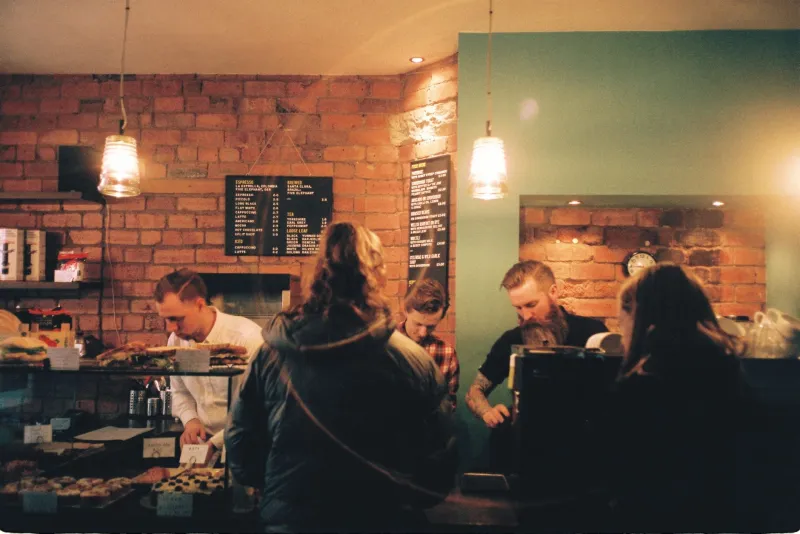
At 12:17 on a Tuesday, something shifts on the high street. The estate agent checks his watch. The nurse on a split shift appears from nowhere. A bloke in a fleece starts reading the specials board as if it is a legal document. By 12:25, the queue has formed: not a line, exactly, more a loose agreement with geometry. By 12:40, it is a small civilisation with its own rules, weather and moral code.
At Latimer's Sandwich Co., we have watched this ritual from behind the counter for long enough to know that the lunchtime queue is not chaos. It is a highly evolved British system. It just looks like chaos because everyone is being extremely polite about it.
The 12:17 Threshold
Every sandwich shop has a threshold moment. It is the point at which the shop stops being a room with sandwiches in it and becomes a queue with a purpose. The telltale signs are subtle. Someone puts their phone away. Someone else takes their wallet out, then puts it back because it is too early. A customer who was browsing the fridge suddenly becomes a customer who is waiting, and everyone behind them adjusts without anyone saying a word.
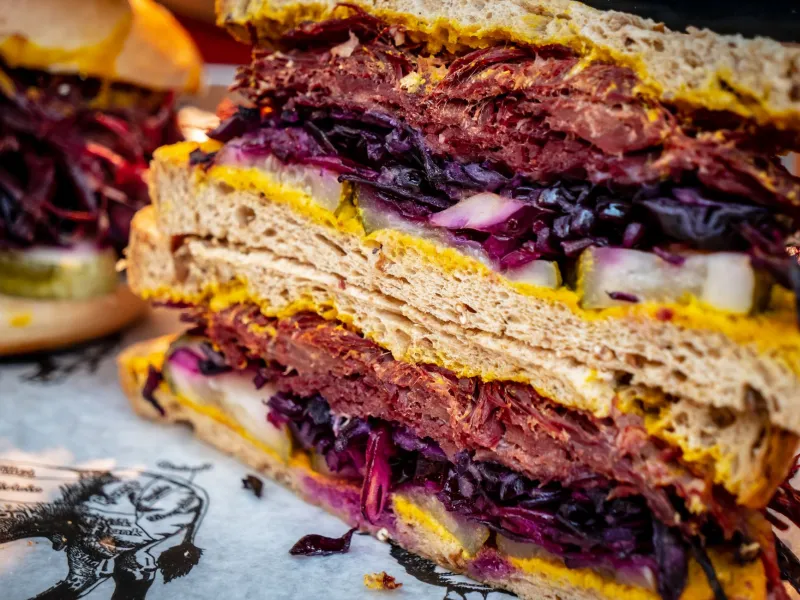
This is the great unspoken rule of the British lunch queue: you must never appear too keen. You may be starving. You may have been thinking about a salt beef on rye since 10:45. But you join the back of the queue with the studied calm of someone who has simply found themselves there by accident.
The Geometry of a Good Queue
A good queue has shape. It follows the counter, respects the door, and leaves a gap for the person coming out with a paper bag and a coffee. A bad queue spreads across the shop like spilled soup. It blocks the crisps. It traps the person who only wants a bottle of water. It creates a small traffic island of people pretending they are not in the way.
The ideal queue is a gentle curve. It allows browsing without loitering. It lets the person at the front step forward, order, pay and step aside in one smooth movement. The person at the back should be able to see the specials board without performing a small squat. If the queue has a kink in it, someone has either misunderstood the system or is trying to read the ingredients list from a distance of four metres.
And then there is the doorway. The doorway is sacred. Do not stand in it. Do not hover in it while deciding between two fillings. The doorway is for entering, leaving and the brief, apologetic shuffle that happens when two people try to do both at once.
The Order Itself
When you reach the counter, the clock starts. Not literally, but everyone behind you can hear it. The order should be clear, complete and delivered with the confidence of someone who has done this before.
There are small courtesies that make the whole thing sing. Know whether you want it toasted before you are asked. Know if you want salt and pepper. Know if you are taking away or eating in, and if you are eating in, have a rough idea of where you might sit. If you are ordering for a colleague, have their order written down. Do not ring them from the counter and ask what they want. That is not a lunch order. That is a hostage negotiation with mayonnaise.
The phrase 'I'll have the same as him' is acceptable, provided you actually want the same as him. The phrase 'what would you recommend?' is also acceptable, but it should not be followed by a detailed rejection of every recommendation. At that point, you are not asking for advice. You are conducting a tasting menu by imagination.
The Indecisive Customer
The indecisive customer is not a villain. They are a familiar character in the lunchtime drama, and we have all been them. They are the person who arrives at the front of the queue and suddenly forgets every sandwich they have ever eaten. They read the board. They look at the fridge. They ask about the soup. They ask about the soup again. They choose a filling, then ask whether it comes with salad, then decide they might prefer the other one.
There is a way to handle this with dignity. If you are the indecisive customer, say so. A simple 'I'm sorry, I'm dithering, give me a second' does wonders. It acknowledges the queue, absolves you of malice and gives everyone behind you a small role in the drama. If you are behind the indecisive customer, the correct response is a barely perceptible nod and a look of studied patience. You may sigh internally. You may not sigh externally.
A well-run shop helps here. A short menu helps. Clear specials help. A member of staff who can say 'the chicken and tarragon is moving fast today' helps enormously. Indecision feeds on too much choice. A good counter guide is part host, part therapist and part air traffic controller.
A Word from the Other Side of the Counter
From our side, the queue is not an inconvenience. It is the shop's pulse. A queue tells you what people are in the mood for. It tells you when the office crowd is coming, when the school run is finishing, when the rain has driven everyone indoors. It tells you whether the new filling is landing or whether the trusty cheese and pickle is doing the heavy lifting again.
It also tells you whether the shop has its rhythm right. A good queue moves. It does not lurch. It does not stall because someone cannot find their card, or because the person at the front is ordering six bespoke sandwiches with six different bread choices. The best customers are not the fastest ones. They are the ones who understand that the queue is a shared lunchtime resource.
Why the Queue Matters
A sandwich shop queue is a small, temporary community. It is one of the few places in modern British life where strangers of different ages, accents and lunch agendas stand together and quietly agree on the rules. Nobody is in charge. Nobody has written the rules down. But everyone knows them.
And when it works, it is a lovely thing. The queue shuffles forward. The counter fills the bags. The door opens and closes. Someone says 'thanks, you too' to a person who said 'enjoy your lunch'. The high street does its thing, one sandwich at a time.
So next time you join the polite stampede, remember: keep the doorway clear, have your order ready, and be kind to the ditherer. The queue is not there to slow you down. It is there to remind you that lunch is a shared ritual, and that a good sandwich is always worth a small wait.